Painful Lumbosacral Radiculopathy (LSR)

More commonly known as sciatica, chronic painful LSR is a condition caused by damage or irritation of the nerve root in the lower spine. The pain typically radiates from the lower back down the leg and can be accompanied by numbness, tingling, or weakness. For many patients, these symptoms are disabling, limiting mobility and quality of life.

Painful LSR or sciatica can be caused by many factors, the most common being a bulging or herniated disc. The condition can resolve with rest and conservative care, including physical therapy and common pain medications, but for many patients such an approach is inadequate.

LSR becomes a chronic condition when nerve inflammation and pain continue for more than three months following the onset of symptoms.

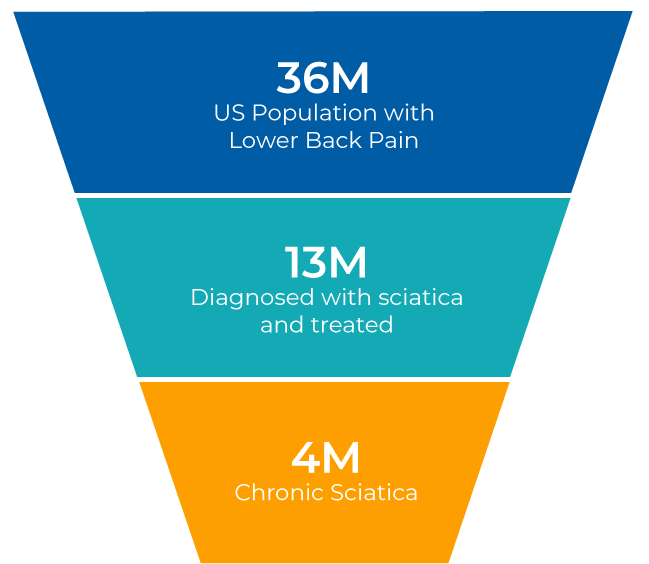
Back pain including LSR: #1 cause of disability in the U.S. for the past three decades*
No FDA-approved therapeutics for LSR and limited treatment options available
The cost of back pain to the U.S. healthcare system is $135B+ annually
Back pain is #1 reason for opiate initiation**

*JAMA. 2018;319(14):1444-1472. doi:10.1001/jama.2018.015; * *IQVIA market analytics 2024

LSR Back-Pain-Prevalence

Despite its prevalence, there are no FDA-approved pharmaceutical treatments for chronic sciatica.

Common management options for chronic sciatica include pain medications, physical therapy, epidural steroid injections, fusion surgery or implantable devices that require invasive surgical intervention, such as the placement of spinal cord stimulators. These approaches often provide only temporary relief and do not address the underlying nerve injury or inflammation that drives the condition.

Treatment Opportunity

C-1101 is a purified, multi-protein solution derived from human platelets in plasma collected from healthy donors. The product contains consistent concentrations of cytokines, growth factors, and matrix proteins to help trigger the body’s natural healing response. Delivered via an epidural injection, C-1101 provides supraphysiologic concentrations of these proteins directly to the site of nerve injury.

By addressing the underlying cause of chronic sciatica rather than masking pain, C-1101 has the potential to represent a first-in-class of non-opioid disease-modifying therapeutics for patients with limited or ineffective options today.

Consano Bio is investigating C-1101 in a first-in-human, randomized, controlled dose escalation Phase 1 clinical trial evaluating patients with chronic sciatica.

More information about the C-1101 Phase 1 clinical trial may be accessed on ClinicalTrials.gov.

Treatment-Opportunity-Pyramid